An Introduction to Advanced Nuclear Reactors
A brief review of fundamental aspects of advanced nuclear technologies and SMRs.
The landscape of nuclear energy is evolving with rapid advancements in technology and a shifting focus towards Small Modular Reactors (SMRs) and advanced reactors. These innovations are not only pivotal in addressing contemporary energy needs but also crucial in maintaining the United States' leadership in global nuclear technology, especially given the intertwined issues of national security and environmental sustainability. Here, we will review the fundamental aspects of advanced nuclear technologies and SMRs, discussing their current state, challenges, benefits, and the regulatory landscape shaping their development.
Bipartisan Push for Nuclear Advancement: Securing a Green, Energy-Secure Future
The surging interest in artificial intelligence (AI) technologies is poised to dramatically increase global energy demand, signaling a potential hockey-stick growth curve for decades. As AI systems become more prevalent across industries — from autonomous vehicles to data-intensive machine learning applications — the energy required to support these technologies is expected to rise exponentially. This sustained increase in demand underscores the critical need for reliable and robust energy solutions like nuclear power. Unlike intermittent renewable sources, nuclear provides a continuous, stable output, making it an indispensable component in meeting future energy needs. Given the lengthy development and construction periods associated with gigawatt-scale new nuclear facilities, the urgent and growing demand for energy highlights the essential role of advanced reactors and SMRs in securing a sustainable energy future.
Advanced reactors and SMRs, while newer to the commercial market, have long been integral to military applications such as submarines and aircraft carriers. Today, there is a critical push to ensure that the U.S. remains at the forefront of nuclear technology globally, driven by bipartisan support: Republicans tend to emphasize national security and economic development opportunities, while Democrats tend to focus on environmental and climate impacts.
Current Scenario
Government Response
- Federal legislation
- DOE funding, GAIN, ARDP
- NRC funding and actions
Industry Response
- Increased activity by technology developers
- Availability of venture capital funding
- Coordination of industry initiatives
- Protection of National Security — nuclear provides a path to strengthening national energy independence by reducing reliance on foreign oil and gas, which can be geopolitically unstable. It can also enhance the reliability and security of national energy infrastructure through domestically produced nuclear energy.
- Concern Over Lack of U.S. Leadership in Nuclear Industry — legislators are motivated to reclaim a leading role in nuclear technology innovation amidst increasing global competition, particularly from countries like China and Russia. Political leaders emphasize the importance of driving technological advancements and maintaining a competitive edge in high-tech industries critical to national and economic security.
- Growing Commitment to Green Energy — nuclear power stands out as a potent tool in reducing carbon emissions, pivotal in the broader strategy to combat climate change. Not only does it provide a stable, reliable source of low-carbon electricity that complements intermittent renewables like wind and solar, but it also excels in overall life-cycle resource efficiency. Compared to other power sources, nuclear energy utilises fewer net resources and produces minimal waste. The waste generated is not only compact but also recyclable, a practice already implemented in France. Even without recycling, the volume of spent fuel is substantially smaller compared to the continuous emissions produced by fossil-fuel plants over their operational lifetime.
- Continued Need for Fuel Diversity — future-looking leaders are concerned with ensuring a balanced energy mix to reduce dependence on any single energy source and enhance energy security, as well as diversifying power generation to stabilise energy prices and supply. As coal assets are retired from the grid, the fuel mix of baseload generation is trending to near exclusivity for natural gas. Nuclear brings a reliable alternative to the mix that hedges natural-gas supply issues.
The Department of Energy (DOE) supports this through initiatives like the Gateway for Accelerated Innovation in Nuclear (GAIN), which facilitates access to national lab resources, and the Advanced Reactor Demonstration Program (ARDP), which provides funding to finalise advanced reactor designs and secure regulatory approval. Commercially, we're also seeing increased activity by technology developers, greater availability of venture capital funding for advanced nuclear, and increased coordination of industry initiatives by associations and other industry organisations.
Why Advanced Nuclear and Why Now?
Advanced reactors, and SMRs in particular, offer potential economic and significant operational benefits. While traditional large-scale nuclear units like the AP1000 units recently completed at Vogtle extend beyond $30 billion (>$10,000/kW), nth-of-a-kind SMRs are aspiring to cost as little as $4–5,000/kW, opening new financing avenues. Their smaller size and modularity could potentially lead to more competitive pricing in the long run, especially as economies of scale and the increased productivity of shop fabrication come into play. Moreover, grid operators value SMRs for their ability to integrate more seamlessly into the power grid, offering flexibility in operations.
The momentum behind advanced nuclear technology, including SMRs, is picking up speed now due to a confluence of technological, economic, environmental, and geopolitical factors. Below are some key reasons why advanced nuclear is becoming increasingly relevant and pursued:
Technological Advancements
Significant advancements in nuclear technology have made newer designs safer, more efficient, and potentially cheaper to build and operate compared to traditional nuclear reactors. One of the primary achievements of advanced reactor designs is the decreased possibility of any radioactive release. This achievement, met in a number of different ways, enables a number of advancements that affect the economics and operation of the units. These advancements include passive safety systems that lessen the need for operator action and reliance on offsite power sources. One notable result of the smaller-sized reactors and enhanced safety features is a reduction in the emergency planning zone. The smaller emergency planning zones enable more versatile siting. Other benefits include increased fuel efficiency and more nimble load-following capability allowing integration with renewable energy systems: traditional nuclear reactors produce at consistent levels, generally at full power or baseload, but many advanced reactors can change power levels as the grid changes load. All together, these advancements make nuclear a more versatile option in the modern energy landscape.
Policy and Regulatory Support
Governments around the world are increasingly supportive of nuclear energy as part of their energy strategy. However, additional effort will be needed in policies that facilitate the development and deployment of advanced reactors, such as streamlined regulatory processes, financial incentives, and direct funding for research and development. In the U.S. programs such as the Department of Energy's Advanced Reactor Demonstration Program (ARDP) provide critical support to bring prototypes to market. At the United Nations Climate Change Conference of the Parties 28 (COP 28) in late 2023, 20 countries committed to tripling the amount of nuclear power globally by 2050.
Economic and Industrial Development
Advanced nuclear reactors offer potential economic benefits, including job creation in the construction, operation, and maintenance phases. Reactor developers are actively searching for locations to site manufacturing capacity to meet projected demand, an opportunity that would provide long-term jobs rather than the transient construction jobs typical of most construction. The modularity of SMRs can reduce both capital costs and construction times, eventually making nuclear projects financially viable for a wider range of investors and countries.
Scalability and Flexibility
SMRs, in particular, are designed to be built in factories and shipped to sites for assembly, which can significantly reduce construction times and costs. Their smaller size and modularity also allow for scalability and flexibility in deployment, making them suitable for a variety of locations, including remote, behind-the-meter, or off-grid areas.
Integration with Renewables
Advanced reactors are being designed to operate in concert with renewable energy sources. They can provide stable baseload power, which is crucial for balancing grids that rely heavily on intermittent renewable sources like wind and solar. Research is underway within organizations such as the Electric Power Research Institute (EPRI) to help grid operators minimize the impacts of intermittent resources, potentially increasing demand for baseload nuclear generators.
Nuclear Beyond Electricity
Many of the advanced reactor designs operate at much higher temperatures than the current fleet of light-water reactors. These high temperatures enable missions beyond traditional electricity generation, including process heat, hydrogen generation, district heating, desalination, and wastewater treatment. These use cases could shift the economics even more favorably: by direct use of the heat from the reactors (as opposed to converting heat to rotation to electricity and then back to heat), the thermal efficiency is significantly improved.
Public and Private Sector Interest
There is growing interest from both public and private sectors in developing and deploying advanced nuclear technologies. In addition to the sizable contributions from public sources (e.g., DOE ARDP), companies like TerraPower, X-energy, and others have garnered significant investment from private entities, including renowned philanthropists and investors, signaling a strong market interest in nuclear innovation.
International Collaboration and Competition
As countries like China and Russia advance their nuclear capabilities, there is a competitive drive among Western nations to not fall behind in nuclear technology. This has spurred increased investment and collaboration on advanced nuclear projects. For example, Ontario Power Generation (Canada), Tennessee Valley Authority (US), General Electric-Hitachi (GEH, global), and Synthos Green Energy (Poland) are collaborating in a four-way venture to finalize the design of GEH's BWRX-300 SMR design.
Revival of Nuclear Acceptance
Shifts in public perception regarding nuclear power, driven by its low-carbon benefits and new safety features, have led to a renewed acceptance and even advocacy for nuclear solutions in the energy mix. Gone are the days when the mental model of the general populace criss-crosses the relatively uneventful events of the Three Mile Island accident with the fictional account in The China Syndrome of the same vintage; both are distant history and rarely remembered in the zeitgeist. The real and significant improvements in the safety of advanced reactors relative to their already safe ancestors adds further distance for reality from the fear of nuclear power posited in the late 1970s.
Even given all these factors, in order for advanced reactors to be successfully commercialized, the industry must demonstrate that first-of-a-kind (FOAK) costs are justifiable and that subsequent units (nth-of-a-kind, or NOAK) will be significantly cheaper. The evolution from multiple reactors in naval applications to more streamlined designs in commercial reactors illustrates both progress and the challenges of simplifying complex systems for broader commercial use. Demonstrating confidence in the ability to narrow the gap between FOAK and NOAK costs remains the most significant hurdle in the commercialization of advanced reactors.
Exploring the Spectrum of Advanced Nuclear Reactors
Advanced nuclear reactors represent a significant shift from traditional reactor designs, offering improved safety features, enhanced efficiency, and a broader spectrum of use cases. As the nuclear industry evolves, a diverse array of advanced reactor technology has emerged, each with unique characteristics and potential applications. This section delves into the major types of advanced reactors, including their operational principles, benefits, and the roles they could play in the future energy landscape.
Light Water Small Modular Reactors (SMRs)
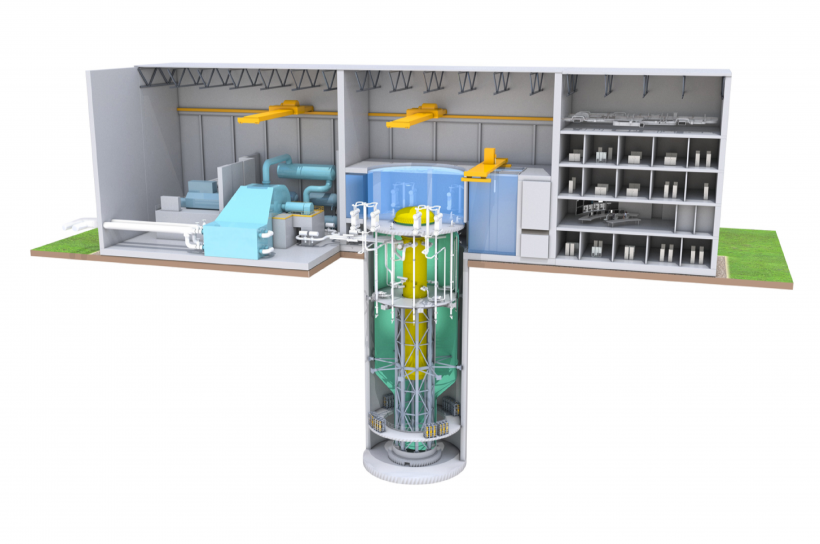
Light Water Reactors (LWRs) have been the backbone of the commercial and military nuclear industry, and SMRs build on this proven technology by scaling down the size of the reactor while incorporating modular construction techniques. These reactors use light water (regular H2O water, as opposed to "heavy water" that has deuterium, or D2O, in place of hydrogen) as both a coolant and a moderator. The small size of SMRs offers several advantages, including reduced initial capital investment, enhanced safety due to simpler, more compact designs, and the ability to site them in locations not suitable for larger plants. Companies like GEH and NuScale Power are leading the development of LWR SMRs, with designs that promise to streamline deployment and reduce nuclear's financial and logistical barriers.
Notable LWR SMR developers include:
- GE-Hitachi
- NuScale
- Holtec
- Westinghouse
- Rolls-Royce (UK)
High-Temperature Gas-Cooled Reactors (HTGRs)
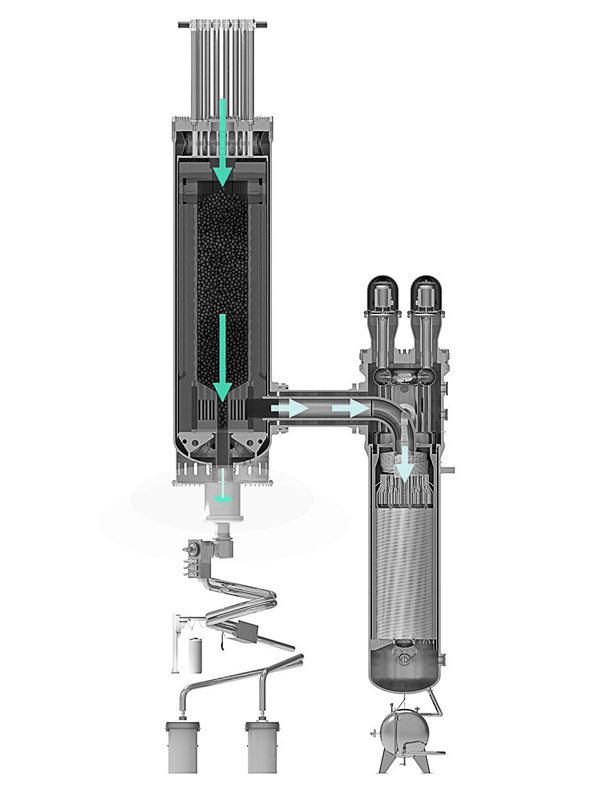
HTGRs use helium gas as a coolant instead of water, operating at much higher temperatures than traditional reactors. This high operational temperature enables better thermal efficiency and the potential to support industrial processes that require heat, such as hydrogen production. The fuel used in HTGRs is often structured in robust graphite matrices, enhancing safety due to the high heat tolerance and inherent stability of the fuel design. For example, X-energy's TRISO-X fuel is a pebble of fuel surrounded by layers of silicon carbide and pyrolytic carbon. The U.S. NRC has recognized this fuel design as the functional containment itself, enabling many of the capabilities discussed above. The modular nature of some HTGR designs also allows for scalability and factory fabrication, potentially reducing costs and construction times.
Molten Salt Reactors (MSRs)
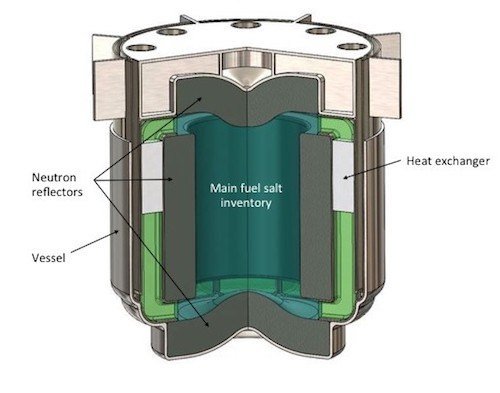
MSRs represent a radical departure from conventional nuclear technologies, using a liquid salt mixture as both fuel and coolant. This configuration allows for continuous reprocessing of the fuel, which can significantly reduce waste and enhance fuel utilization. MSRs operate at low pressure and high temperatures, which can improve safety and thermal efficiency. The liquid fuel acts as its own safety system: in the event of a power outage, it can drain into passively cooled containment tanks. Operation at low pressure also means that there is no motive force to move the molten salt fuel away from the reactor: radioactivity can't escape because there is no way for it to move anywhere, thus dramatically reducing safety risk. Companies like Terrestrial Energy and others are exploring MSRs for their potential to revolutionize energy generation with their versatility and inherent safety features. Core Power is another example, working in a consortium to develop molten salt reactors for marine use.
Fast Neutron Reactors (FNRs)
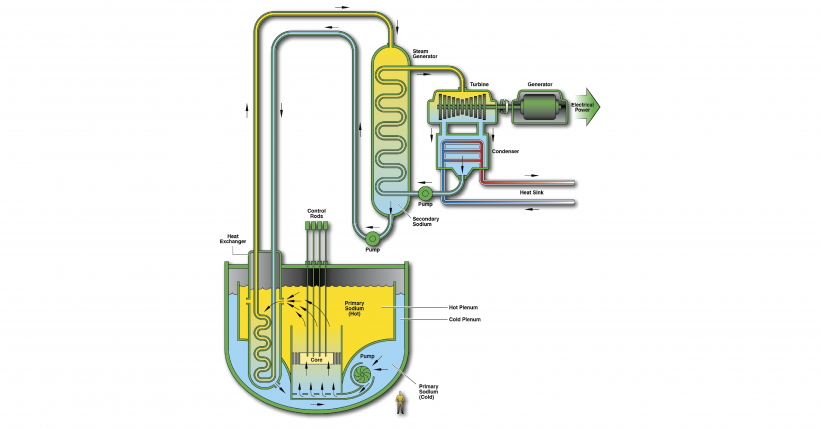
Fast Neutron Reactors utilize fast neutrons to sustain the nuclear chain reaction, unlike the more ubiquitous reactors that rely on thermal (slowed) neutrons where the pace of the reaction is moderated. The fast neutrons enable the reactor to burn a wider range of nuclear fuels, including depleted uranium and spent fuel from other reactors. This capability makes FNRs particularly attractive for their potential to reduce nuclear waste and make better use of the world's uranium resources. FNRs often use liquid metal coolants, such as sodium, lead, or lead-bismuth eutectics to achieve high heat transfer efficiency at high temperatures without the high pressures required in water-cooled systems. The developers of FNR technologies are using modern technology advancements to build on historical research and prototypes.
Microreactors
Microreactors represent an exciting frontier in nuclear technology, distinguished by their exceedingly compact scale and capacity for ease of fabrication, transportability, and rapid deployment. These reactors typically generate less than 10 MW of power, making them ideal for small electric grids and locations that cannot support larger installations. Microreactors hold particular promise for remote or isolated communities, military bases, and industrial sites where they can provide reliable, uninterrupted power supply. They are designed with a focus on simplicity and safety, often incorporating passive safety systems that require minimal human intervention. The development of microreactors is also viewed as a strategic asset for national security, providing resilient power options that can reduce dependence on vulnerable energy infrastructures.
Unlike their larger SMR cousins with economically-driven designs, many microreactor designs are mission-driven, similar to their naval analogs in submarines or aircraft carriers. While economics are important, the use case for these reactors is more critical. Microreactors are increasingly recognized for their strategic value, with substantial funding from the Department of Defense (DOD), which prioritizes national security and is willing to invest at a premium. This investment is particularly impactful in remote locations like Alaska, where many communities rely on expensive coal plants or the challenging logistics of transporting liquid fuels (e.g., diesel); for these use cases, the introduction of microreactors could offer a significant shift towards more economical and environmentally friendly power sources.
Fusion Reactors
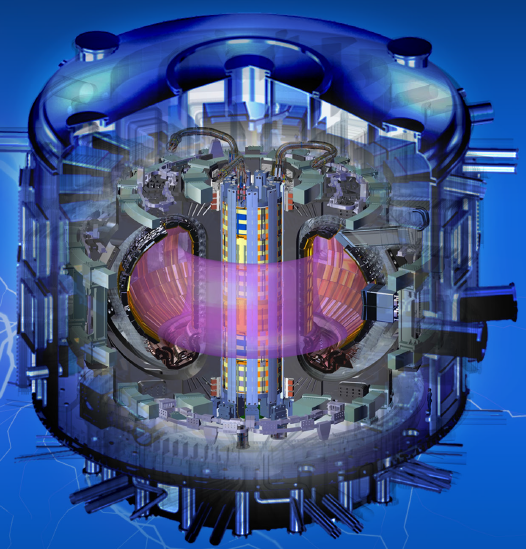
While still largely experimental, fusion reactors offer a long-term vision for nuclear energy with the potential for near-limitless, clean energy production. Fusion reactors work by combining light atomic nuclei to form heavier nuclei, releasing energy in the process — a stark contrast to the fission process used in all current commercial reactors. The result is an energy source that produces very little radioactivity — so little, in fact, that these facilities will be regulated by the NRC by a process similar to that used to regulate laboratories working with medical isotopes instead of that used to license reactors. Companies like General Fusion, Commonwealth Fusion Systems, Helion, and government-led projects around the world are exploring various approaches to controlled fusion, including magnetic confinement, inertial confinement, and novel hybrid confinement techniques.
| Reactor Type | Description | Developers |
|---|---|---|
| Light water reactor (LWR) SMRs | Water-cooled, modular nuclear reactor designs. |
|
| High-Temperature Reactors | Operates at high temperatures for increased efficiency. |
|
| Molten Salt (MSRs) and Fast Neutron (FNRs) Reactors | MSRs use liquid fuel for efficient, flexible nuclear reactions and FNRs do not moderate the chain reaction. |
|
| Fusion Reactors | Harnesses the process that powers the sun for potentially limitless, clean energy production. |
|
Redefining Nuclear: New Players, New Rules
Historically dominated by the "Big Four" (Westinghouse, GE, Stone & Webster, and Babcock & Wilcox), the field now sees new entrants (NuScale, TerraPower, X-energy, Oklo, and more) expanding the competitive landscape. It's premature to pick a winner as the market dynamics are still taking shape: many feel that success is likely to favor the first to build a successful project, rather than the best design per se. That said, the various designs discussed above do offer different capabilities, so there are likely to be multiple winners in races for different applications.
We're also seeing an evolution on how nuclear projects are financed. Historically, financing for nuclear projects has come from utility ratepayers, but with the emergence of new technologies, new models, and novel use cases, these dynamics are likely to evolve.
To learn more about these evolving dynamics, read our whitepaper on new nuclear power business approaches for new commercial entrants.
| Developer | Design | Notes |
|---|---|---|
| Light Water SMRs | ||
| NuScale | Original design approved by NRC. Recently announced VOYGR with 77 MWe and up to 12 modules (924 MWe). |
|
| Holtec International |
|
|
| GE Hitachi |
|
|
| Rolls-Royce |
|
|
| Westinghouse |
|
|
| Other US-Based Advanced Reactors | ||
| X-energy |
|
|
| TerraPower |
|
|
| Kairos Power |
|
|
| Moltex Clean Energy |
|
|
| US-Based Microreactors | ||
| Westinghouse |
|
|
| Oklo |
|
|
| USNC |
|
|
| Radiant |
|
|
| BWXT |
|
|
Several proposed projects highlight the evolving landscape and the strategic push to diversify nuclear capabilities across North America. For instance, the collaboration between Ontario Power Generation (OPG) and GE Hitachi in Canada is advancing with the BWRX-300 reactor project at the Darlington site, which is currently undergoing regulatory review by the Canadian Nuclear Safety Commission (CNSC). This project benefits from an international framework of cooperation, underscored by a memorandum among the CNSC, the U.S. Nuclear Regulatory Commission (NRC), and the UK's Office of Nuclear Regulation (ONR), facilitating cross-border insights and regulatory alignment.
In the United States, the Clinch River project stands out due to the Tennessee Valley Authority's (TVA) established operational and rate-making authority, positioning it as a key player in demonstrating the viability of new nuclear technologies. Additionally, the U.S. Department of Energy's Idaho National Laboratory offers vast land resources that are pivotal for the experimental deployment of various reactor types, including space-demanding projects.
It's important to note that while these projects are promising and under active development, none have yet finalized an agreement of sale, but we are seeing promising forward movement.
The Regulatory Pathways for Nuclear Energy: Parts 50, 52, and 53 Explained
The regulatory landscape for nuclear energy in the United States is governed by a robust framework that ensures the safe, reliable, and environmentally responsible deployment of nuclear technologies. As the nuclear sector evolves, particularly with the advent of advanced reactors and SMRs, understanding the nuances of the regulatory parts — 10 CFR Parts 50, 52, and 53 — becomes crucial. These parts represent different licensing processes established by the Nuclear Regulatory Commission (NRC), each tailored to meet the demands of varying nuclear development stages and technological innovations.
Part 50: Traditional Nuclear Plant Licensing
Part 50 of Title 10 in the Code of Federal Regulations lays the foundation for the licensing of nuclear reactors in the U.S. This regulation encompasses the issuing of construction permits and operating licenses based on a two-step process. Initially, a construction permit is granted to allow the building of a nuclear plant, during which time the applicant continues to finalize design details. Upon completion of construction, a separate application is submitted for an operating license. This process allows for considerable flexibility during the construction phase, enabling adaptations as more is learned and technologies evolve. However, the Three Mile Island accident in 1979 shone a spotlight on the risk associated with Part 50. At the time of the accident, many plants were under construction. That is, a Construction Permit was issued, but the plant was not yet licensed. Just as the Construction Permit applicant had considerable flexibility in revising the design, the NRC was able to impose design enhancements prompted by the TMI accident.
The Shoreham Nuclear Power Plant on Long Island serves as a poignant example of the complexities involved in nuclear reactor licensing under Part 50. The plant received its construction permit and a low-power operating license, allowing it to operate at up to 5% capacity as part of initial testing phases. However, it encountered insurmountable challenges in securing an approved Emergency Plan, largely due to the lack of cooperation from surrounding communities. This inability to gain community support and subsequent regulatory approvals prevented the plant from progressing beyond the initial low-power phase, leading to its ultimate shutdown without ever achieving full power operation. This case underscored a critical lesson for the industry: the importance of securing comprehensive regulatory and community approval before proceeding with construction, influencing future projects to prioritize these aspects to avoid similar pitfalls. While Part 50 licensing can be cumbersome, a number of SMR early movers intend to utilize this methodology rather than the Part 52 combined construction and operating license approach discussed below because of the flexibility Part 50 offers as the design is finalized.
Part 52: Streamlined Licensing for New Reactors
Recognizing the need for a more predictable process, Part 52 was introduced to facilitate the licensing of new nuclear plants. This part allows for a Combined Construction and Operating License (COL) that integrates the permission to construct and operate a reactor under a single license. Part 52 also introduces two regulatory building blocks related to the COL. These are the Early Site Permit (ESP) and the Design Certification (DC). The ESP allows a site owner to seek pre-approval of the selected site based on a plant parameter envelope that encompasses an array of plant designs. The DC enables a reactor technology developer to seek pre-approval of the new design. An applicant for a COL may elect to use both or neither of these building blocks or proceed directly to a COL. In any case, the environmental and safety analyses are the same, just approved at different times in the process.
The key advantage of Part 52 is that it requires the design to be finalized before construction begins, reducing uncertainties and potential delays caused by newly imposed regulatory requirements. However, this rigidity means that any design changes during construction require NRC approval, potentially complicating project timelines and adding costs. This quirk caused many of the challenges in the initial U.S. deployment of the AP1000 plants at VC Summer and Vogtle — there were, and will likely always be, some design changes made while constructing FOAK reactors. Now that the AP1000 design has been completed and thus truly finalized, Part 52 offers a potential pathway for more efficient license approval.
Part 53: A Modern, Risk-Informed Approach
Part 53 is the latest regulatory initiative, currently under development, which aims to be more adaptive and technology-agnostic. Both Parts 50 and 52 are based on the assumption that the reactor design seeking review is a large light-water reactor (LWR). As such, the regulations are specific to these associated design features. Part 53 is designed to accommodate the diversity of new and emerging reactor technologies, including non-LWR designs that differ significantly from traditional reactors. Part 53 intends to enhance the licensing process by being more risk-informed and performance-based, potentially reducing the time and cost associated with bringing advanced nuclear technologies to market.
The transition from Part 50 to Parts 52 and 53 illustrates the NRC's response to the evolving nuclear industry landscape. Part 50 offers more flexibility but at the cost of less predictability, whereas Part 52 provides greater certainty but less flexibility. Part 53 seeks to balance these aspects by offering a framework that adapts to the innovative features of modern nuclear technology while maintaining the stringent safety standards necessary for public and environmental protection, though industry feedback and public comment required NRC to go back to the drawing board on Part 53.
Strategic Implications for Developers
For developers of advanced nuclear reactors and future owners of a facility, choosing the right regulatory path is a strategic decision that can significantly affect the project's feasibility and commercial viability. Each path offers distinct benefits and challenges, and the choice depends on the specific circumstances of the project, including technology type, development stage, and financial and risk management strategies.
Some companies plan to use Part 50 for first-of-a-kind development, capitalizing on its flexibility and incorporating lessons learned. Once the particular design is finalized and built, Part 52 can serve as the regulatory vehicle to leverage these analyses and evaluations for follow-on units.
The ongoing development of Part 53, in particular, reflects a proactive approach to regulatory reform, aiming to foster innovation in the nuclear sector while ensuring safety. As this part becomes more defined, it could potentially become the preferred regulatory pathway for new nuclear projects, especially those utilizing technologies that diverge from traditional nuclear design paradigms.
Securing a Sustainable Future with Advanced Nuclear
The path forward for advanced reactors and SMRs involves navigating a complex landscape of technological innovation, regulatory challenges, and financing mechanisms. Continued support from federal programs, coupled with robust industry and state partnerships, will be critical to advancing these technologies from conceptual designs to commercial reality for early movers. If the industry can capitalize on the benefits of modular construction, standardization, and regulatory efficiency, the technology can become one of the most economic energy generation resources available on the market while remaining the only zero-carbon 24/7 resource available to mankind. This journey, while fraught with challenges, presents an unparalleled opportunity to redefine the future of energy in ways that are both sustainable and strategically advantageous.